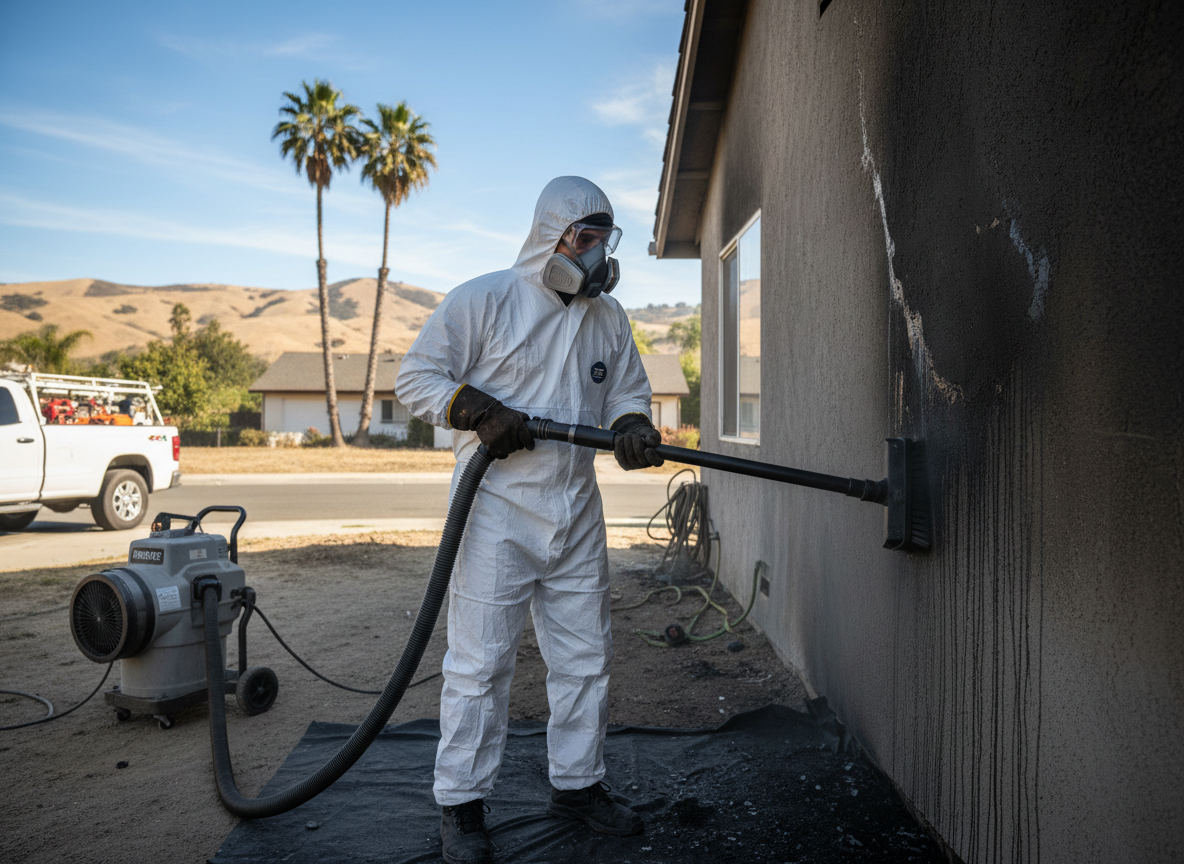
Soot from structure fires in San Luis Rey settles differently depending on the age of the home and construction materials. Many properties along Mission Avenue and nearby streets feature older stucco exteriors and lath-and-plaster interiors that allow fine particles to embed in porous surfaces. Standard wiping fails here because alkaline soot can etch finishes and continue off-gassing if not fully neutralized and extracted. Technicians must test pH levels on walls and ceilings before choosing the correct cleaning agents to avoid further damage to original woodwork or tile.
HVAC systems in San Luis Rey homes often pull soot deep into ductwork during a fire, especially when winds from the east push smoke through open vents. Leaving residue inside ducts means particles recirculate for months afterward. Proper removal requires isolating the system, using HEPA-filtered equipment on registers and returns, and sometimes pulling sections of flex duct for inspection. Homeowners frequently overlook this step until odors return after the initial cleanup.
Electrical fires common in older San Luis Rey neighborhoods produce oily soot that bonds to surfaces differently than wood-fire residue. This type requires solvent-based cleaners rather than water-based ones, and multiple passes with changing media to lift the film without spreading it. Technicians also check behind outlet covers and inside light fixtures where soot hides and can cause future corrosion on wiring.
Technician insight
In San Luis Rey, the thing that catches most people out with soot removal is how the older stucco homes along Mission Avenue trap particles in the wall cavities during the dry east winds that often follow a fire. Homeowners try wiping visible surfaces and think the job is done, but the soot stays behind the plaster and keeps smelling until those cavities are opened and extracted.
Kitchen Soot After Electrical Fire
An electrical fire in a 1960s home near Mission Avenue left oily soot on cabinets and in the return duct. We isolated the HVAC, tested surfaces, and used solvent cleaning on the plaster walls while pulling the flex duct sections for inspection. After two passes and a final air quality check the home passed clearance with no recurring odor.
How it works
- 1
Initial Assessment
Inspect all affected rooms, test surfaces for pH, and map soot migration paths through the home's structure.
- 2
Containment Setup
Isolate rooms and HVAC zones to prevent cross-contamination during removal work.
- 3
Surface Cleaning
Apply appropriate neutralizers and extraction methods to walls, ceilings, and contents based on soot type.
- 4
Duct and Hidden Area Treatment
Clean registers, returns, and accessible duct sections, then verify airflow after restoration.
- 5
Final Verification
Recheck surfaces and air quality before releasing the space back to the homeowner.
Pricing
Cost depends on square footage affected, soot type, and whether ducts require access; we provide upfront assessments before any work begins.