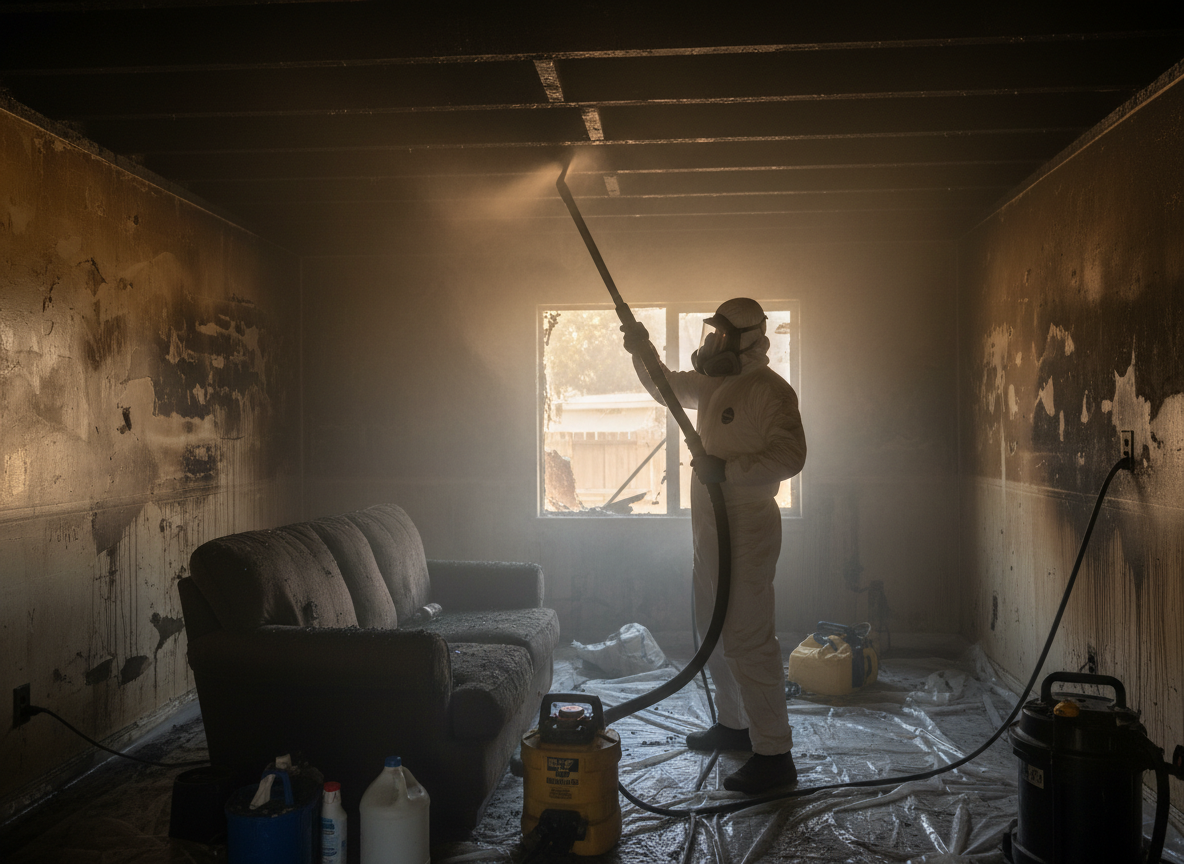
Smoke from structure fires in San Luis Rey travels through the HVAC systems and porous materials common in homes built along Mission Avenue and nearby streets. Fine soot particles settle into drywall, insulation, and attic spaces, requiring removal rather than surface cleaning to prevent recurring odors and corrosion on metal fixtures. Technicians begin with air quality testing and thermal imaging to locate hidden deposits that standard vacuuming misses.
Older stucco and wood-frame homes in the San Luis Rey area often have lath-and-plaster walls that absorb alkaline smoke residues more deeply than modern drywall. This demands pH-neutral cleaning agents followed by sealing primers to block stains from bleeding through new paint. In dry San Diego County conditions, soot becomes more abrasive, increasing the risk of scratching surfaces during removal if improper tools are used.
Restoration crews contain the work area with plastic sheeting and negative air machines to keep particles from migrating into unaffected rooms. All affected contents are inventoried, cleaned off-site when possible, or disposed of if contamination levels exceed safe thresholds. Final clearance includes olfactory inspection and particle counting to confirm the space meets post-fire habitability standards before occupants return.
Odor Neutralization Techniques
Ozone and hydroxyl generators are deployed only after physical cleaning is complete, with run times adjusted for the volume of each San Luis Rey residence. Thermal fogging with odor counteractants reaches into wall cavities where smoke has traveled through electrical outlets and plumbing chases.
Technician insight
In San Luis Rey, the thing that catches most people out with smoke remediation is how the steady coastal breeze funnels fine soot through the open rafters and single-pane windows typical of homes near 4050 Mission Ave, so even a kitchen fire can leave residue in bedrooms two stories up that only shows up weeks later when humidity shifts.
Kitchen Fire Smoke Spread
A contained kitchen fire in a San Luis Rey home sent smoke through the central air ducts into upstairs bedrooms. Inspection revealed soot inside the ductwork and embedded in carpet padding. Crews sealed the system, cleaned all ducts and surfaces, and treated the attic insulation before returning the home to the owners.
How it works
- 1
Initial Assessment
Inspect all affected rooms, test air quality, and map smoke migration paths using specialized equipment.
- 2
Containment Setup
Isolate the impacted zones with physical barriers and negative air pressure to prevent cross-contamination.
- 3
Soot and Residue Removal
Clean surfaces, contents, and HVAC components with appropriate agents matched to residue type and surface material.
- 4
Odor Elimination and Sealing
Apply neutralization methods then seal porous materials to lock in any remaining odors.
- 5
Final Verification
Conduct clearance testing and walkthrough to confirm the property is safe for reentry.
Pricing
Cost depends on square footage impacted, depth of smoke penetration into cavities, and whether contents require off-site cleaning; upfront quotes provided after on-site evaluation.