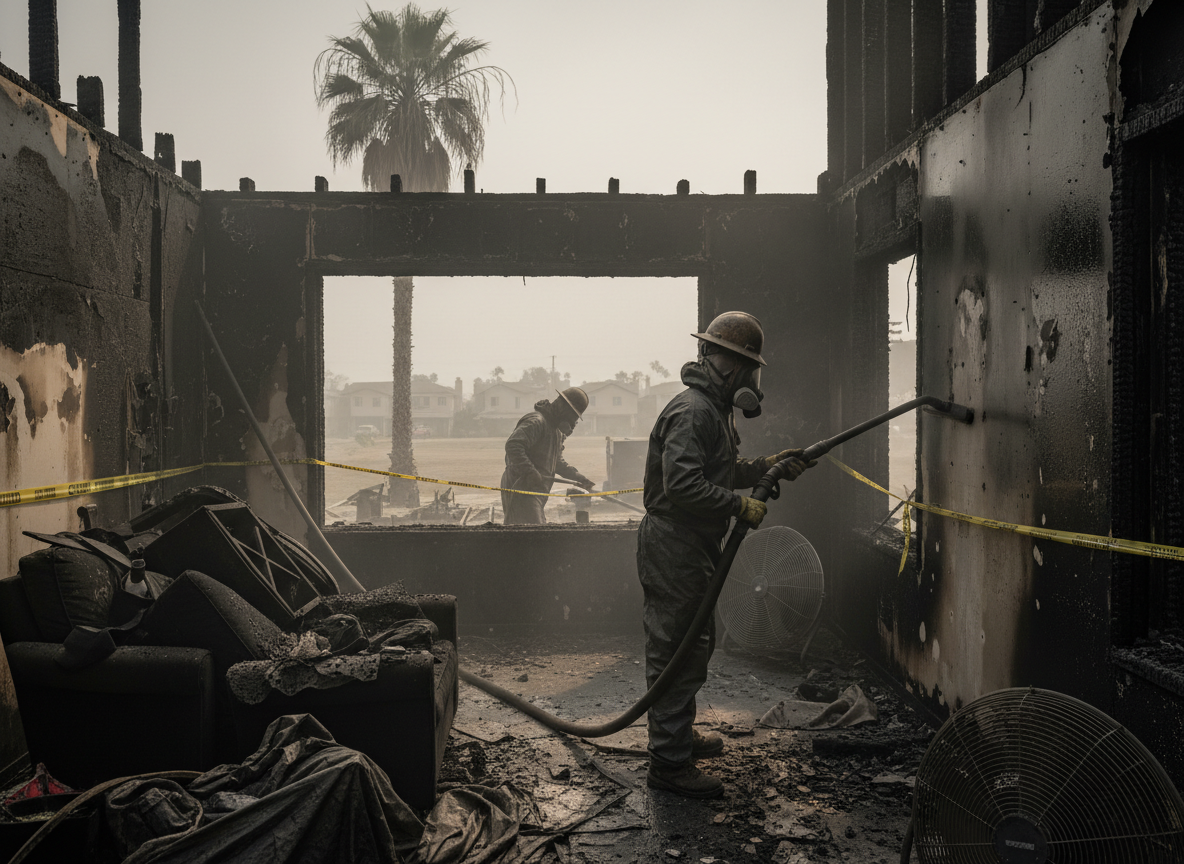
San Luis Rey homes often feature older stucco and wood-frame construction from the 1960s onward, which allows smoke and soot to travel through attics, wall cavities and HVAC systems more readily than in newer builds. After a fire, crews must remove charred materials, HEPA vacuum surfaces and apply specialized cleaners to prevent etching on metal fixtures and glass. The dry San Diego County climate speeds up soot settling but also makes odor molecules bind tightly to porous materials like drywall and insulation, requiring multiple treatments and air scrubbing before any reconstruction begins.
Wind patterns common to the area, including gusts from the east, can push smoke into neighboring properties even when the original fire stayed contained. Technicians check for hidden moisture introduced during firefighting, because trapped water behind cabinets or under flooring quickly leads to secondary mold growth in the mild winters. Every job starts with a room-by-room inspection to map pH levels of soot so the correct neutralizers are chosen rather than risking further damage with the wrong chemistry.
Cleanup crews coordinate with local waste haulers for proper disposal of contaminated debris and document all steps for insurance adjusters familiar with San Luis Rey claims. Homeowners are advised to avoid turning on HVAC systems until ducts are cleaned, as recirculating air can spread fine particles throughout the house. Final clearance testing confirms that airborne particulates meet safe levels before residents return.
Technician insight
In San Luis Rey the thing that catches most people out with fire damage clean up is how the older single-story stucco homes with attic insulation let smoke travel under the roof deck and into every wall cavity. The dry local air makes the soot stick fast, so skipping the pH testing step always leads to callbacks when walls are painted too soon.
Smoke Migration Through Attic in San Luis Rey
A kitchen fire in a 1970s home near Mission Avenue sent smoke into the attic. Inspection showed soot had settled throughout the insulation and into bedroom ceilings. Crews removed the insulation, cleaned all framing, treated the cavities and dried residual moisture from suppression water before reinstalling new insulation.
How it works
- 1
Emergency Board-Up and Site Security
Technicians arrive within hours, secure openings and prevent further weather or unauthorized entry damage to the structure.
- 2
Soot and Debris Removal
All loose soot is vacuumed with HEPA equipment and charred contents are inventoried and removed for disposal.
- 3
Surface Cleaning and Odor Treatment
Walls, ceilings and fixtures receive pH-appropriate cleaners followed by ozone or hydroxyl treatment to neutralize embedded smoke odors.
- 4
Drying and Clearance Testing
Moisture meters guide drying of any water introduced during suppression, then air quality testing confirms the space is safe for re-entry.
Pricing
Upfront quotes provided after on-site inspection; final cost depends on square footage affected, soot penetration depth and any hidden moisture.