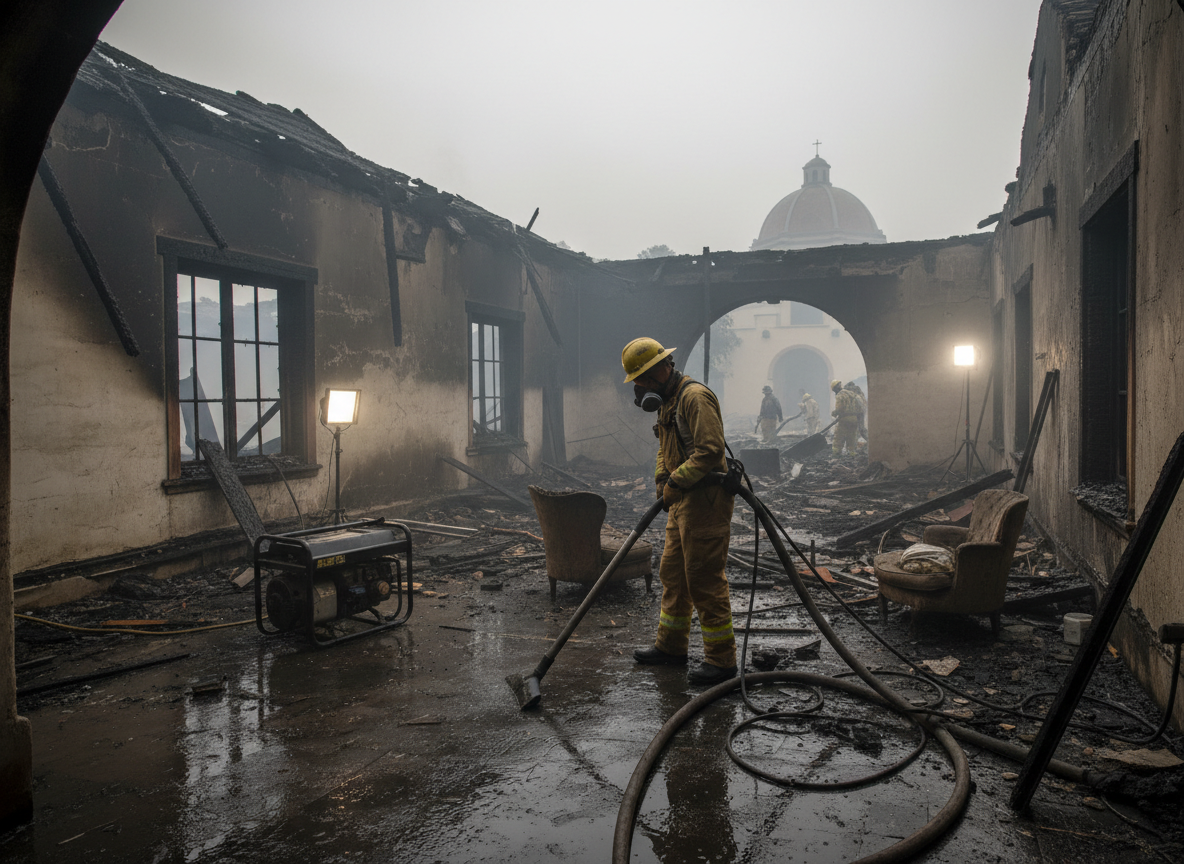
Emergency fire damage restoration in San Luis Rey starts the moment the call comes in because smoke and soot keep working long after the flames are out. Crews from 4050 Mission Ave roll immediately to secure the structure, prevent further water intrusion from suppression efforts, and begin removing charred debris that can stain concrete slabs common in local ranch-style homes. Every job includes documenting affected rooms for insurance while isolating HVAC systems so soot does not travel through the ductwork that runs under many 1960s and 1970s houses along Mission Avenue.
Older housing stock near the San Luis Rey River often features lath-and-plaster walls and original electrical wiring that complicates cleanup. Soot embeds in the textured surfaces and travels through wall cavities, requiring removal of baseboards and sometimes sections of drywall rather than simple surface cleaning. Technicians test for hidden moisture in subfloors because fire-suppression water can pool against the slight slope toward the river, creating conditions for mold if drying is delayed even a few days.
San Luis Rey summer heat accelerates corrosion on metal fixtures and appliances once soot settles, so crews prioritize removing copper pipes and electrical panels first. Containment barriers are set up room by room to keep fine particles from migrating into unaffected living spaces, especially important in single-story homes where open floor plans connect the kitchen directly to bedrooms. Final verification includes air sampling and surface testing before any reconstruction begins.
Technician insight
In San Luis Rey the thing that catches most people out with Emergency fire damage restoration is how quickly soot travels through the under-slab ducts common in homes near Mission Ave; if you do not seal the system the first day, every room ends up needing the same level of cleaning.
Mission Ave Kitchen Fire
A cooking fire in a 1970s ranch house near 4050 Mission Ave sent smoke through the central HVAC. We found soot embedded in the plaster walls and under the slab. Crews isolated the ducts, removed contaminated sections of drywall, and dried the slab before any odor remained in the bedrooms.
How it works
- 1
Immediate Response
Answer the call 24/7 and dispatch a crew from 4050 Mission Ave to assess safety and stop ongoing damage.
- 2
Site Securement
Board openings, extract standing water from suppression, and set up containment to limit soot spread.
- 3
Content and Debris Removal
Remove charred materials and salvageable contents while documenting everything for the insurance adjuster.
- 4
Cleaning and Drying
Clean surfaces, treat odors, and use drying equipment suited to local stucco and slab construction.
- 5
Verification and Handover
Test air quality and surfaces before releasing the property for repairs.
Pricing
Pricing varies by fire size, affected square footage, and extent of smoke migration into wall cavities; we provide an upfront scope after the initial inspection.