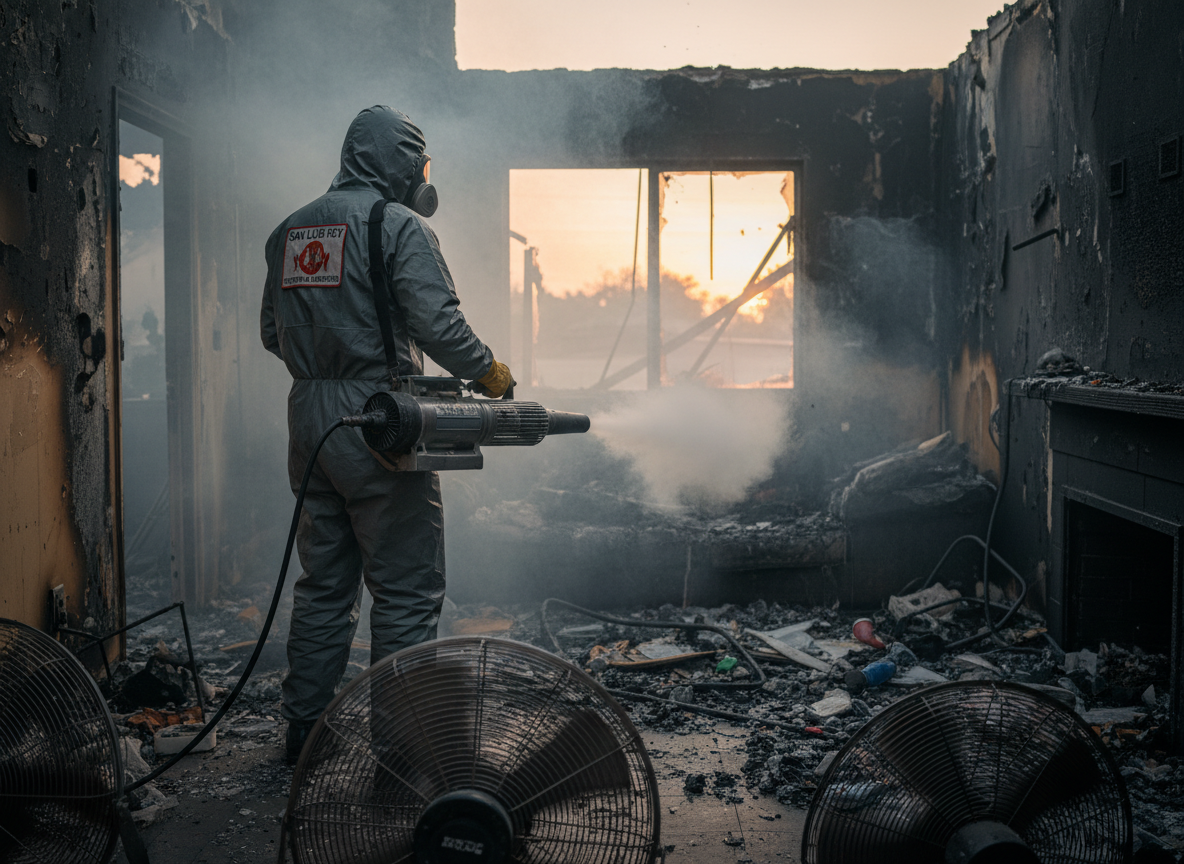
Smoke odors in San Luis Rey homes often linger in the porous plaster and older insulation found in neighborhoods around Mission Avenue and near the San Luis Rey River. Technicians use hydroxyl generators and thermal fogging to reach cavities where standard cleaning fails, especially after kitchen or electrical fires common in the area's aging housing stock. Proper sequencing prevents re-soiling once humidity from coastal mornings sets in.
HVAC systems in single-story ranch homes throughout San Luis Rey frequently distribute soot and odor through shared ducts. Sealing and cleaning these lines before deodorization avoids cross-contamination to unaffected rooms. Technicians also address attic insulation that absorbs creosote from nearby wildfire smoke events, replacing material only when saturation exceeds safe thresholds.
Concrete slab foundations and tile flooring prevalent in San Luis Rey properties can trap odors beneath surfaces if water was used during suppression. Infrared moisture mapping locates hidden pockets before ozone or encapsulation treatments begin. This step is critical because residual moisture combined with smoke creates persistent musty smells that surface weeks later.
Final verification includes air sampling at multiple points inside the structure rather than relying on surface wipes alone. Homeowners along 4050 Mission Ave corridor often notice odors return during Santa Ana wind events if subfloor or wall cavities were missed, so documentation of each treated zone is provided for future reference.
Technician insight
In San Luis Rey the thing that catches most people out with odor removal after fire is how the older plaster and single-wall construction along the river corridor holds smoke in ways newer homes do not. Once the coastal humidity hits, missed pockets in attics or under slabs release the smell again during wind events.
Persistent odor in 1960s ranch home near Mission Ave
Smoke from a kitchen fire had migrated through shared ducts into bedrooms. Inspection revealed saturated insulation in the attic and residue under baseboards. Hydroxyl treatment combined with targeted insulation removal cleared the odor; follow-up sampling confirmed levels below detection before the family returned.
How it works
- 1
Initial Assessment
Inspect affected rooms, HVAC, attics, and subfloor areas to map smoke migration paths specific to San Luis Rey construction.
- 2
Source Removal
Remove charred materials and clean surfaces before applying any deodorizers to prevent sealing in residues.
- 3
Deodorization Treatment
Apply thermal fogging or hydroxyl processing to penetrate cavities and neutralize embedded smoke molecules.
- 4
Verification and Clearance
Conduct air sampling and walkthrough to confirm odors are eliminated before reoccupancy.
Pricing
Upfront quotes provided after on-site inspection; cost varies with square footage, number of affected cavities, and whether HVAC cleaning is required.