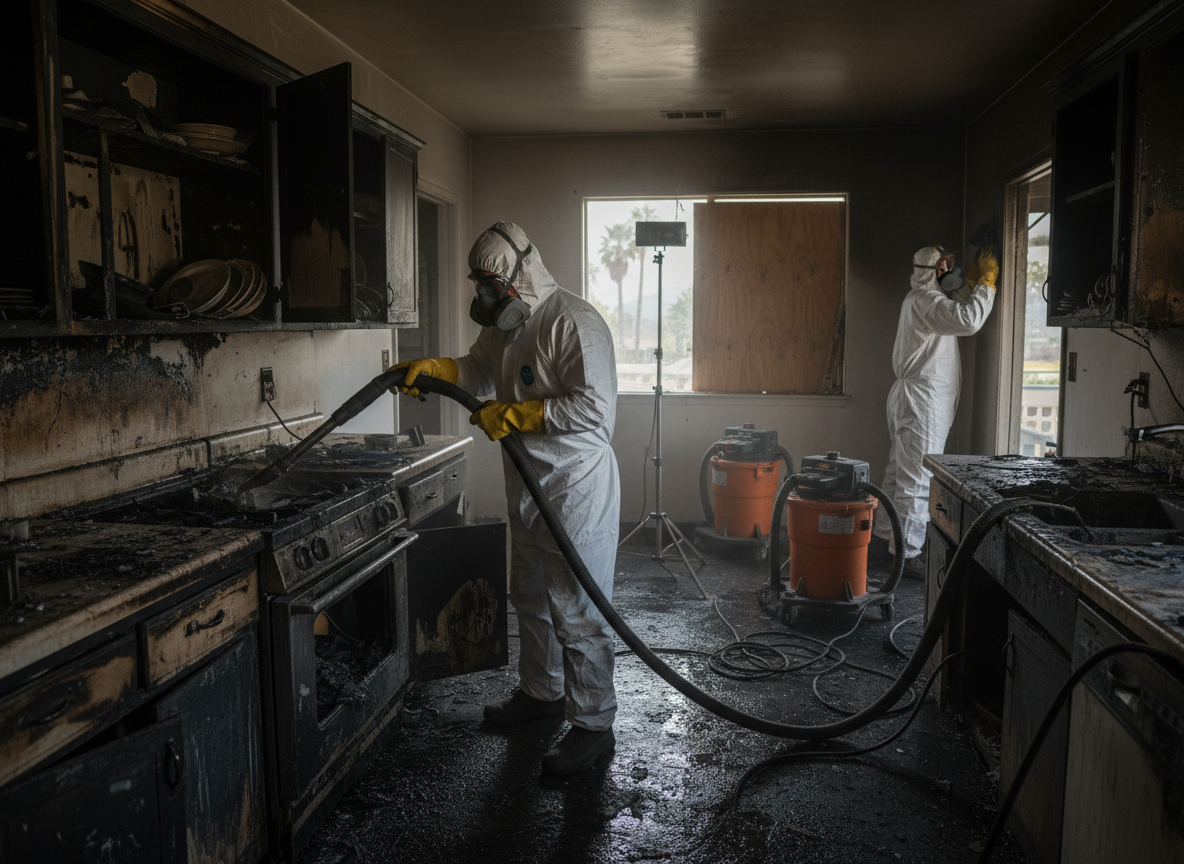
Kitchen fires in San Luis Rey often start from grease buildup or appliance faults and quickly spread soot through single-story ranch homes common near Mission Avenue. Residues from cooking oils penetrate porous materials like drywall and cabinetry, requiring removal rather than surface cleaning to prevent recurring odors. Crews address both visible char and invisible smoke particles that travel through HVAC systems typical in these 1960s-1980s builds.
The dry conditions around San Luis Rey accelerate smoke adhesion to surfaces, especially in homes with older electrical wiring that can complicate safe power restoration after a fire. Technicians test for hidden moisture from suppression efforts that may lead to mold if drywall remains saturated. Containment barriers are set early to protect unaffected rooms from cross-contamination during debris removal.
Local regulations in the San Luis Rey area require proper disposal of fire-damaged materials containing lead or asbestos common in pre-1978 construction. Restoration includes HEPA vacuuming followed by chemical neutralization of alkaline soot residues left by synthetic materials in modern kitchens. Final clearance testing confirms airborne particulates meet habitability standards before occupants return.
Technician insight
In San Luis Rey, the thing that catches most people out with Kitchen fire cleanup is how smoke travels through the open floor plans and shared attics in homes near Mission Ave, leaving residue in places far from the original stove or oven.
Hidden Soot in Adjacent Cabinets
A kitchen fire from an overheated pan spread smoke into nearby homes along Mission Ave. Inspection revealed soot inside wall voids and upper cabinets. Crews performed targeted cleaning of cavities and replaced affected insulation before restoring the space.
How it works
- 1
Initial Assessment
Technicians arrive from 4050 Mission Ave to document damage extent, identify smoke migration paths, and note affected materials in the kitchen and adjacent spaces.
- 2
Containment And Safety
Plastic barriers and negative air machines isolate the work zone while electrical and gas lines are secured to prevent further hazards.
- 3
Soot And Residue Removal
Dry and wet cleaning methods extract particles from surfaces, followed by odor counteractant application and disposal of unsalvageable items.
- 4
Restoration And Clearance
Repairs to affected structures are completed and air quality is verified before final walkthrough with the homeowner.
Pricing
Costs depend on square footage affected, depth of smoke penetration, and whether HVAC cleaning or structural repairs are required.