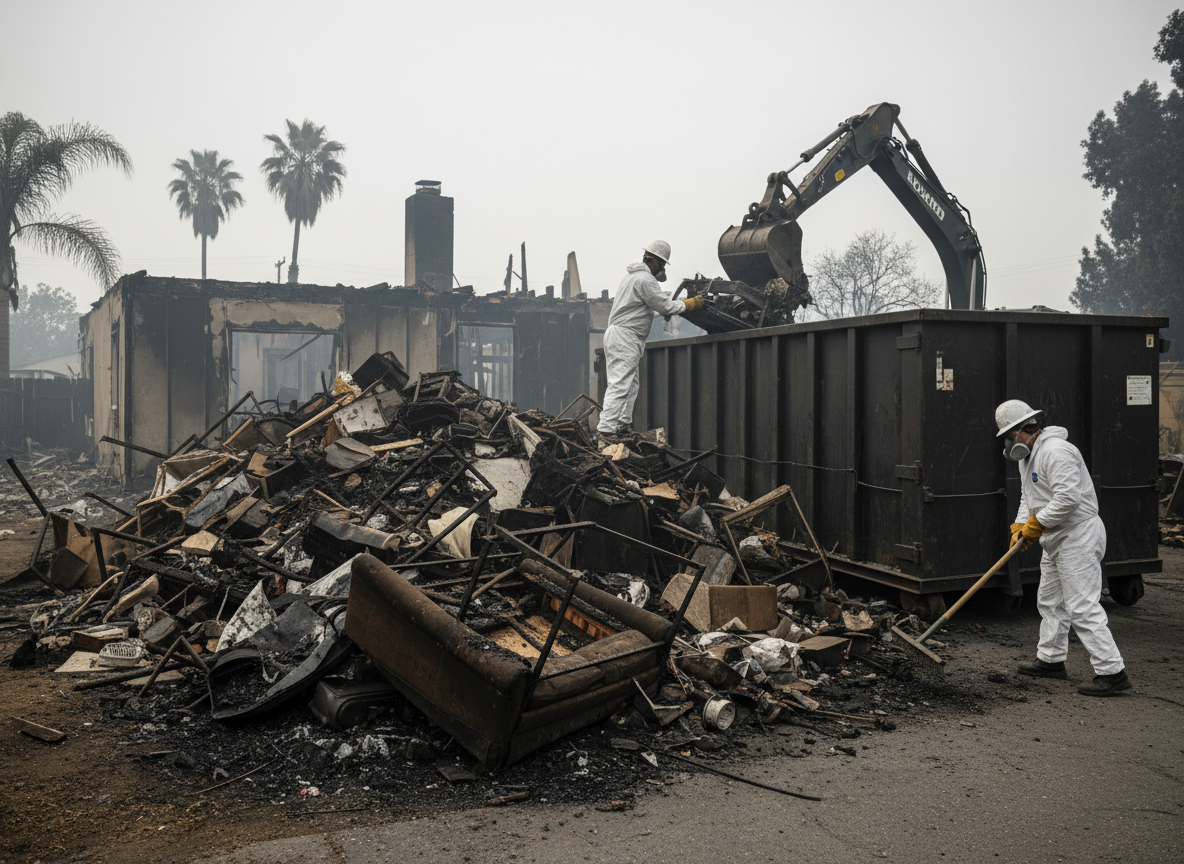
Hoarding situations compound fire damage because stacked materials create deep pockets of hidden char and soot that standard restoration misses. In San Luis Rey homes built from the 1950s through 1970s, narrow hallways and single-story layouts with attached garages often channel smoke into wall cavities and under subfloors. Crews must remove layers item by item while monitoring for structural weakening from prolonged heat exposure on older framing. Contaminated porous items like mattresses and upholstered furniture must be bagged on site to prevent cross-contamination during transport through residential streets.
Edge cases appear when fires start in storage rooms packed with paper and fabrics; these produce thick, acidic smoke that etches metal fixtures and leaves residue on concrete slabs common in San Luis Rey construction. Post-fire hoarding cleanup requires HEPA filtration units running continuously because disturbed debris can re-aerosolize particulates into living spaces. Crews also watch for hidden water lines damaged during suppression that later leak into piled belongings, creating secondary mold growth inside the same structures.
San Diego County permitting for large-volume waste removal adds steps when hoarded materials exceed normal household loads. Teams coordinate with local landfills for acceptance of charred debris while documenting chain of custody. Electrical panels in older San Luis Rey homes frequently sit behind accumulated items, requiring careful exposure before any cleaning begins to avoid accidental contact with live wiring still energized after the fire.
Technician insight
In San Luis Rey, the thing that catches most people out with hoarding cleanup after fire is how the 1960s slab-on-grade homes along Mission Avenue trap smoke and water under the exact piles that fueled the burn; once you start moving items the odor returns from the concrete pores and you have to treat the slab itself or it never leaves.
Single-Story Home Near the River
A fire started in a storage room packed with boxes and furniture in a San Luis Rey house. We found charred paper fused to the slab and soot pushed into the hallway drywall. We removed layers in sections, treated the concrete, and ran air scrubbers for two days until readings cleared.
How it works
- 1
Initial Assessment
Walk the property at 4050 Mission Ave dispatch to map hoarded zones, note structural concerns, and identify paths for safe material removal.
- 2
Containment Setup
Install negative air machines and plastic barriers to isolate work areas from unaffected rooms before any items are moved.
- 3
Layered Removal
Remove and bag materials room by room, separating char-affected items from salvageable ones while checking for hidden hot spots.
- 4
Deep Cleaning and Verification
Clean surfaces, run air scrubbers, and perform final walkthrough to confirm no visible residue remains in wall cavities or under floors.
Pricing
Cost depends on volume of materials, number of affected rooms, and any structural complications; upfront quotes provided after assessment.