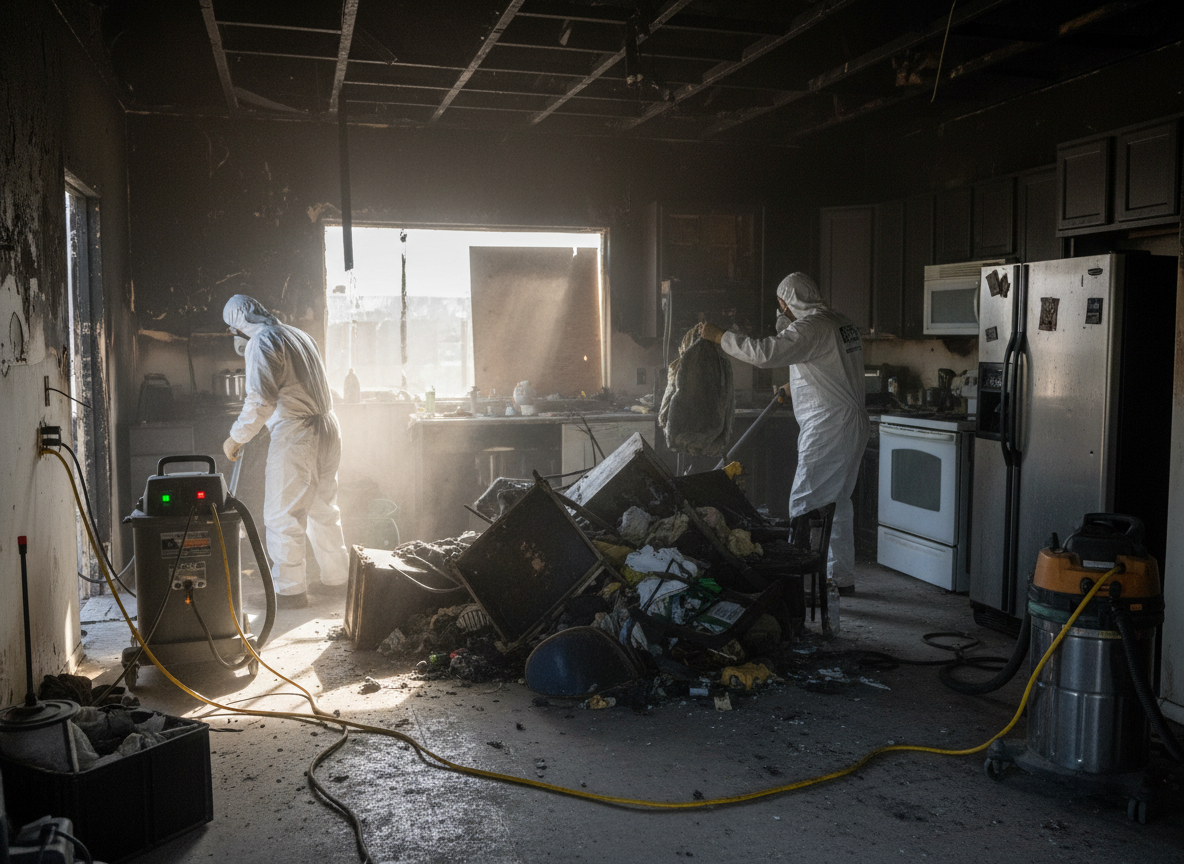
Fire damage restoration near me in San Luis Rey often involves older single-family homes built before 1970 along Mission Avenue and surrounding streets. These structures typically feature wood framing and plaster walls that allow smoke to travel through voids and settle in insulation. Crews must remove affected materials rather than clean surfaces alone because residual odors return when humidity rises during coastal evenings. Containment barriers and negative air machines prevent cross-contamination into unaffected rooms.
San Luis Rey terrain includes flat residential blocks near the San Luis Rey River that can trap moisture after firefighting water is applied. This combination accelerates corrosion on metal ductwork and electrical boxes if drying does not begin within hours. Technicians test moisture levels in subfloors and behind cabinets using meters calibrated for local conditions rather than relying on visual inspection alone.
Edge cases include hidden charring in attic spaces common to ranch-style homes in the area. Without opening ceilings, hidden heat damage leads to future structural weakness. Restoration plans therefore include targeted demolition followed by documentation for insurance adjusters who regularly review San Luis Rey claims.
Code considerations arise when repairs touch electrical panels or HVAC systems in homes near the 4050 Mission Ave corridor. Updated wiring standards must be met even if the fire originated elsewhere, requiring coordination with local inspectors before final clearance.
Technician insight
In San Luis Rey the thing that catches most people out with fire damage restoration near me is how smoke travels through the original plaster-and-lath walls in homes built around Mission Ave. Homeowners think wiping surfaces is enough, but once evening marine air raises humidity the odor returns unless those cavities are opened and treated.
Mission Ave Smoke Migration
A kitchen fire in a 1960s ranch home near 4050 Mission Ave sent smoke through ceiling joists into two bedrooms. Inspection revealed charring along the shared wall and elevated moisture from suppression water. Crews removed affected plaster, dried the framing, and applied odor sealers before drywall replacement, restoring the rooms without recurring smell after humidity changes.
How it works
- 1
Initial Assessment
Technician arrives within hours, documents all affected rooms, and tests for hidden smoke migration through walls and ceilings.
- 2
Containment and Safety
Plastic barriers and air scrubbers isolate the work zone while removing hazardous soot and securing structural risks.
- 3
Material Removal and Drying
Burned drywall, insulation and flooring are removed, followed by industrial drying of remaining surfaces.
- 4
Odor Removal and Reconstruction
Thermal fogging and sealing address embedded smoke odors before new materials are installed to match existing finishes.
Pricing
Upfront quotes provided after on-site inspection; final cost depends on square footage affected and extent of hidden damage.