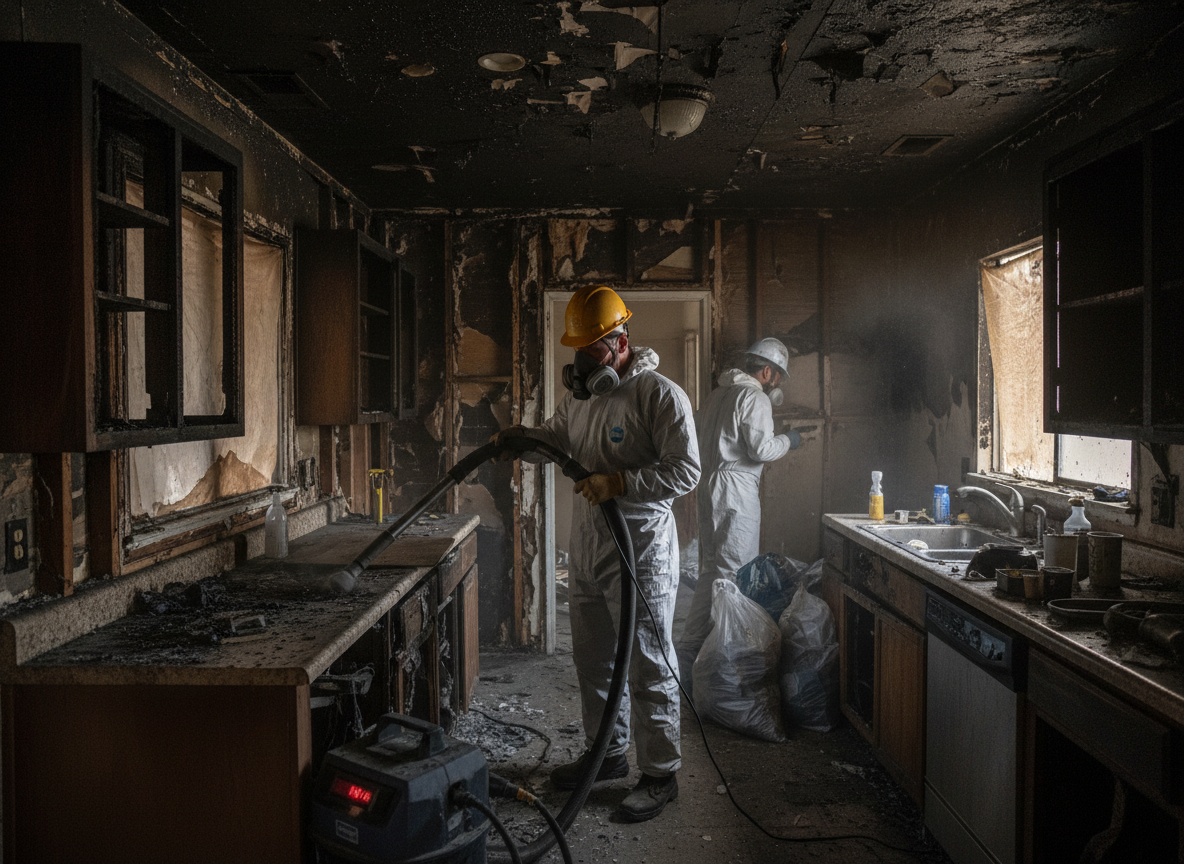
San Luis Rey homes built before the 1970s often feature lath-and-plaster walls and open attics that allow smoke to travel far beyond the fire origin. Restoration crews must pull insulation, clean ductwork, and treat porous surfaces like redwood trim that hold odors longer than drywall. Failing to address these hidden paths leaves residents with recurring smells weeks after the initial event.
The area's dry summers and occasional Santa Ana winds increase the speed at which smoke particles embed into fabrics and HVAC filters. Technicians test air quality in multiple rooms and use negative air machines to prevent cross-contamination between living spaces and garages common in San Luis Rey layouts. Edge cases include electrical fires in older knob-and-tube wiring that require coordinated work with local electricians before any reconstruction begins.
After containment, surfaces receive HEPA vacuuming followed by specialized degreasers safe for stucco exteriors typical along Mission Avenue. Final clearance involves moisture checks on subfloors because coastal humidity can slow drying and promote secondary mold growth if not monitored.
Homeowners should avoid running central air until ducts are cleaned, as recirculating soot can damage newer appliances and furniture finishes.
Technician insight
In San Luis Rey, the thing that catches most people out with fire and smoke damage restoration is how quickly smoke travels through the open attics and shared wall cavities of pre-1980 homes along Mission Avenue and nearby streets. Homeowners often focus only on the burn room and miss the soot that has already settled in insulation and ductwork, which then reactivates with the first coastal humidity spike.
Attic Smoke Migration in a 1960s San Luis Rey Home
A kitchen electrical fire sent smoke upward through an open attic shared with the bedrooms. Inspection revealed heavy soot on rafters and inside HVAC returns that had recirculated particles throughout the house. Crews isolated the system, cleaned all duct runs, removed contaminated insulation, and treated surfaces before reinstalling new blown-in material. The family returned without lingering odors after clearance testing.
How it works
- 1
Emergency Assessment
Technicians arrive within hours, document affected rooms, and test for hidden smoke in attics and wall cavities common in San Luis Rey construction.
- 2
Containment and Safety
Plastic barriers and negative air pressure isolate the work zone to protect unaffected areas and prevent soot spread through shared ventilation.
- 3
Soot and Odor Removal
HEPA filtration, thermal fogging, and surface cleaning address embedded particles on plaster, wood, and HVAC components.
- 4
Restoration and Verification
Repairs restore structure, followed by air quality testing to confirm the home meets habitability standards before reoccupancy.
Pricing
Upfront quotes provided after inspection; final cost depends on square footage affected, depth of smoke penetration into older plaster and insulation, and whether HVAC cleaning is required.