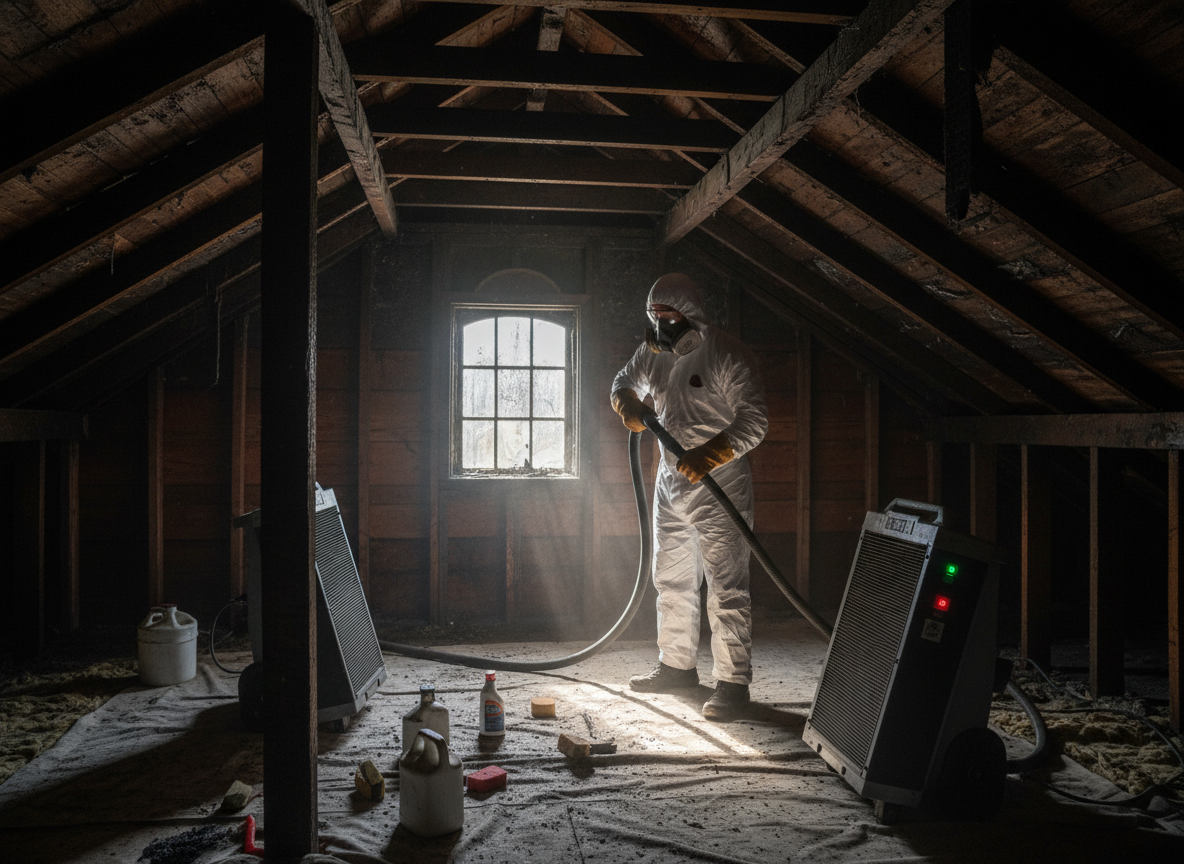
Attic fires in San Luis Rey often start from electrical faults in older wiring common to homes built before 1970 along Mission Avenue and nearby streets. Once flames reach insulation or truss members, smoke travels through ceiling penetrations into living spaces and leaves acidic residue that corrodes metal fasteners and HVAC ducts. Restoration requires removing charred batts or blown cellulose, treating exposed framing with pH-neutral cleaners, and verifying that no embers remain in voids above knee walls before new insulation is installed.
Dry Santa Ana wind events increase the speed at which embers travel through ridge vents and gable ends typical of single-story ranch homes in the San Luis Rey area. Crews must seal off the attic from the rest of the structure immediately, then use negative-air machines to capture fine soot particles that would otherwise settle into wall cavities. Hidden char on rafters can go unnoticed if only surface cleaning is performed, leading to recurring odors during the cooler winter months when attics are less ventilated.
San Diego County building codes require that any structural member showing more than one-quarter inch of char depth be sistered or replaced before insulation and drywall are reinstalled. Technicians also check for compromised knob-and-tube wiring still present in some pre-1960 homes near the river valley. Final clearance includes moisture readings on wood members to confirm drying has reached acceptable levels before the space is closed up again.
Technician insight
In San Luis Rey the thing that catches most people out with attic fire restoration is how the dry climate lets smoke residue sit in the layered insulation of 1950s and 60s homes along the river valley until the first winter rains raise humidity and the odor returns through ceiling registers.
Hidden Char in Mission Avenue Ranch Attic
A kitchen fire spread into the attic of a 1962 single-story home near Mission Avenue. Inspection found extensive char on rafters and heavy soot in the original blown-in insulation. Crews removed all affected material, sistered compromised trusses, and treated remaining wood before reinstalling insulation and verifying no residual odor.
How it works
- 1
Initial Assessment and Safety
Technicians arrive from the Mission Avenue location, secure the structure, and map all fire and smoke paths through the attic using thermal imaging and moisture meters.
- 2
Containment and Debris Removal
Plastic barriers and negative-air setups isolate the attic while charred insulation, debris, and affected wood are removed to prevent cross-contamination into living areas.
- 3
Cleaning and Treatment
Remaining framing and sheathing receive pH-neutral soot removers followed by antimicrobial application where water was used during suppression.
- 4
Repair and Verification
Sistered joists or replaced sections are installed per code, new insulation is added, and final air-quality and odor checks confirm the attic is ready for re-occupancy.
Pricing
Cost depends on attic size, depth of char, and whether structural repairs or electrical updates are required.