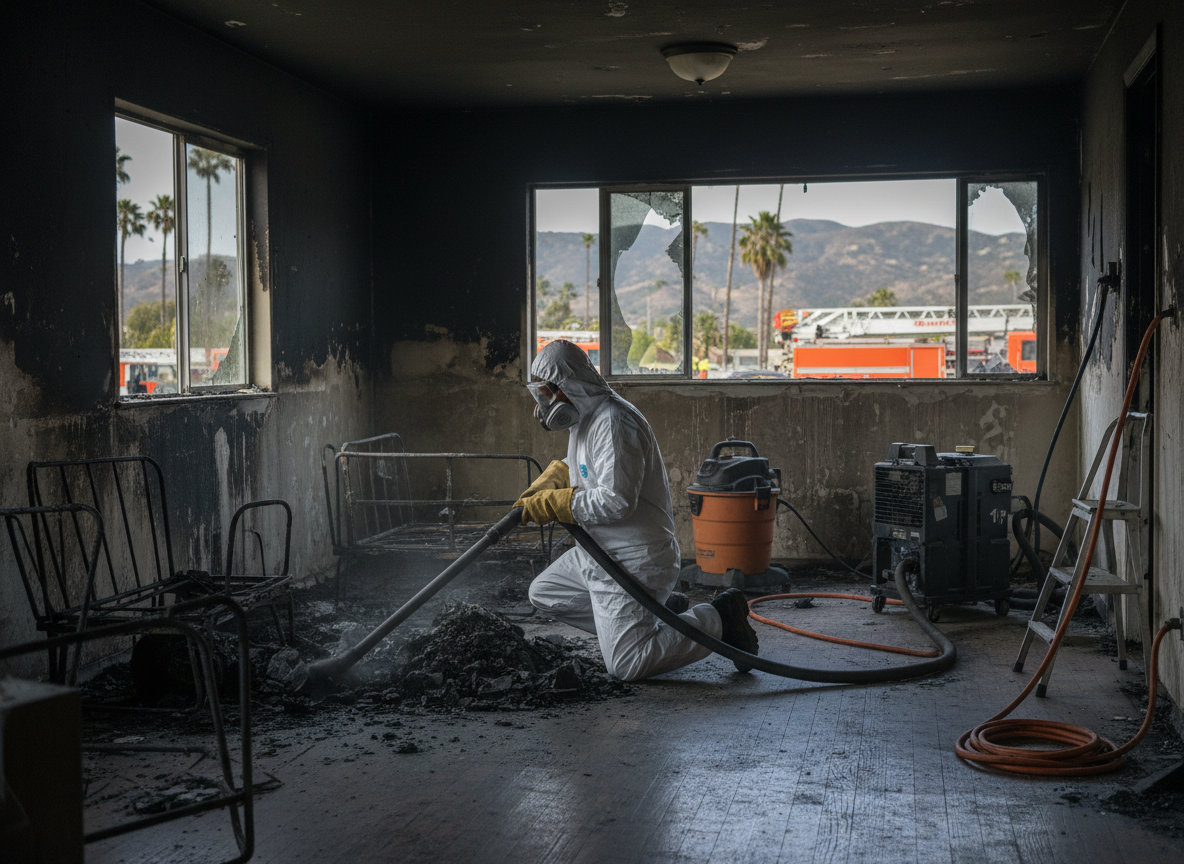
Apartment fires in San Luis Rey often involve rapid smoke migration through shared HVAC ducts and wall cavities in the older multi-unit housing stock near Mission Avenue. Technicians must isolate units quickly to prevent soot from settling on neighboring carpets, cabinets, and electrical fixtures. Porous materials like drywall and insulation in these buildings trap odors that standard cleaning misses, requiring targeted removal rather than surface wiping alone.
Edge cases include fires that start in one unit but affect common corridors or laundry rooms, where code requires verification that fire-rated separations remain intact after cleaning. Residue from burned synthetics can corrode metal components in shared ventilation, so crews test airflow and replace filters before reoccupancy. Working around tenant belongings demands careful documentation to avoid disputes over what was damaged by smoke versus prior wear.
San Luis Rey apartments frequently have limited access points, forcing crews to stage equipment in parking areas and coordinate with property managers to maintain egress during extended jobs. Moisture from suppression water combines with soot to create acidic conditions that etch surfaces if not neutralized within hours. Final clearance involves air sampling and visual inspection of every affected unit to confirm no lingering particulates remain in crevices.
Technician insight
In San Luis Rey, the thing that catches most people out with Apartment fire cleanup is how the older apartment complexes along Mission Avenue share single HVAC trunks, so a small kitchen fire can push soot into three or four units before anyone notices the smell.
Kitchen Fire Smoke Spread
A cooking fire in a ground-floor unit at a San Luis Rey complex sent smoke through the central duct system. Inspection showed soot on upper-floor registers and inside adjacent laundry rooms. Crews sealed the trunk line, cleaned every register and coil, and treated the affected units before returning keys the same week.
How it works
- 1
Initial Assessment
Inspect all affected and adjacent units for soot depth, smoke odor paths, and water intrusion from suppression.
- 2
Containment Setup
Seal doorways, vents, and shared walls to stop cross-contamination between units and common areas.
- 3
Soot and Residue Removal
Clean hard surfaces, extract from carpets and upholstery, and treat HVAC components unit by unit.
- 4
Odor Neutralization
Apply thermal fogging and hydroxyl treatments to penetrate cavities where smoke has traveled.
- 5
Final Verification
Conduct air quality checks and walkthrough with the property manager before releasing units for reoccupancy.
Pricing
Upfront quotes after inspection; cost driven by number of units affected and extent of HVAC involvement.