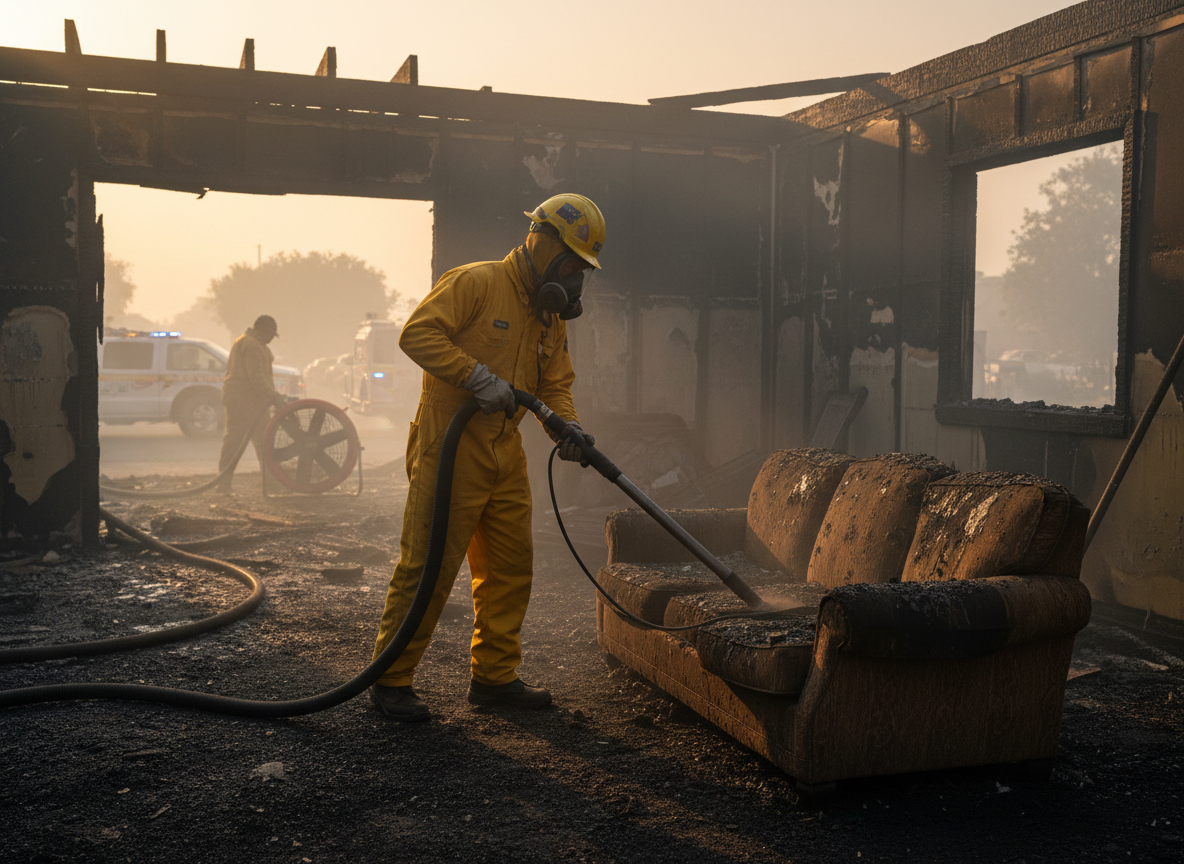
San Luis Rey homes often feature mid-century wood framing and stucco exteriors that allow smoke to travel through attics and wall cavities during structure fires. Rapid oxidation from coastal humidity combined with dry inland winds accelerates corrosion on metal fixtures and HVAC components if residues are not neutralized within the first 24 hours. Technicians at the Mission Avenue location begin with thermal imaging to locate hidden char layers before any demolition, preventing unnecessary removal of original plaster or lath in older properties near the San Luis Rey River.
Power shutoffs are common during regional fire events, so crews carry portable generators and negative-air machines rated for continuous operation to maintain containment while working through the night. Soot from burning plastics common in kitchen fires bonds differently to the porous adobe-style chimneys found in some Vista-adjacent properties, requiring pH-neutral cleaners rather than standard degreasers to avoid etching. Every job starts with a written scope that notes which contents can be cleaned on-site versus moved to the facility for ultrasonic treatment.
Local building codes in San Diego County require permits for any electrical or plumbing work uncovered during fire restoration, and crews coordinate directly with inspectors to avoid delays when replacing charred service panels in homes built before 1970. Seasonal Santa Ana conditions can reintroduce ash into open structures, so tarping and HEPA sealing protocols are adjusted based on current wind forecasts rather than generic checklists.
Seasonal Considerations
Dry summers increase the risk of re-ignition from embers lodged in insulation, requiring repeated site checks even after initial clearance. Winter rains can turn residual ash into acidic runoff that stains concrete slabs in garages and patios common throughout the San Luis Rey area.
Technician insight
In San Luis Rey, the thing that catches most people out with 24 hour fire restoration is how quickly smoke travels through the open rafters of older single-story homes near the river bottom once the Santa Ana winds pick up; waiting even one extra day lets the residue set into the drywall paper and forces full wall replacement instead of surface cleaning.
Kitchen Fire in 1960s San Luis Rey Home
A cooking fire spread soot through the ceiling into the attic of a wood-frame house off Mission Avenue. Inspection showed residue had settled on fiberglass insulation batts and HVAC ducts. Crews removed the affected insulation, cleaned the ducts on site, and treated the plaster walls without opening the original lath. The home passed air-quality testing within 48 hours and avoided full interior gutting.
How it works
- 1
Emergency Board-Up and Site Secure
Install temporary barriers and weatherproofing at 4050 Mission Ave dispatch to prevent further weather intrusion into the fire-damaged structure.
- 2
Assessment and Documentation
Walk the property with infrared cameras and moisture meters to map smoke migration through San Luis Rey homes before any cleaning begins.
- 3
Soot and Residue Removal
Apply specialized agents matched to the fuel load while running HEPA filtration to capture particles before they settle on remaining surfaces.
- 4
Odor Neutralization and Clearance
Run hydroxyl generators and perform post-clean air sampling to confirm the structure meets habitability standards for San Diego County.
Pricing
Upfront written quotes provided after on-site inspection; final cost depends on square footage affected, materials involved, and any required code upgrades.